The Competitive Advantage of Lead Scoring

Lead generation is the foundation of any successful sales and marketing strategy. It fuels the sales pipeline by helping businesses identify potential customers and nurture them into meaningful opportunities.
Yet many companies still struggle to prioritize the right leads. As pipelines grow, sales teams often spend time on prospects that are unlikely to convert, while high-potential opportunities receive limited attention.
In today’s competitive environment, the ability to identify and prioritize the right leads can significantly impact revenue performance. This is where lead scoring becomes a strategic advantage.
In this article, we’ll explore how lead scoring works, why it matters, and how businesses can use it to improve conversion rates, optimize resources, and build a more efficient sales process.
What Is Lead Scoring?
Lead scoring is a methodology used by sales and marketing teams to evaluate the potential value of a lead based on predefined criteria.
These criteria may include:
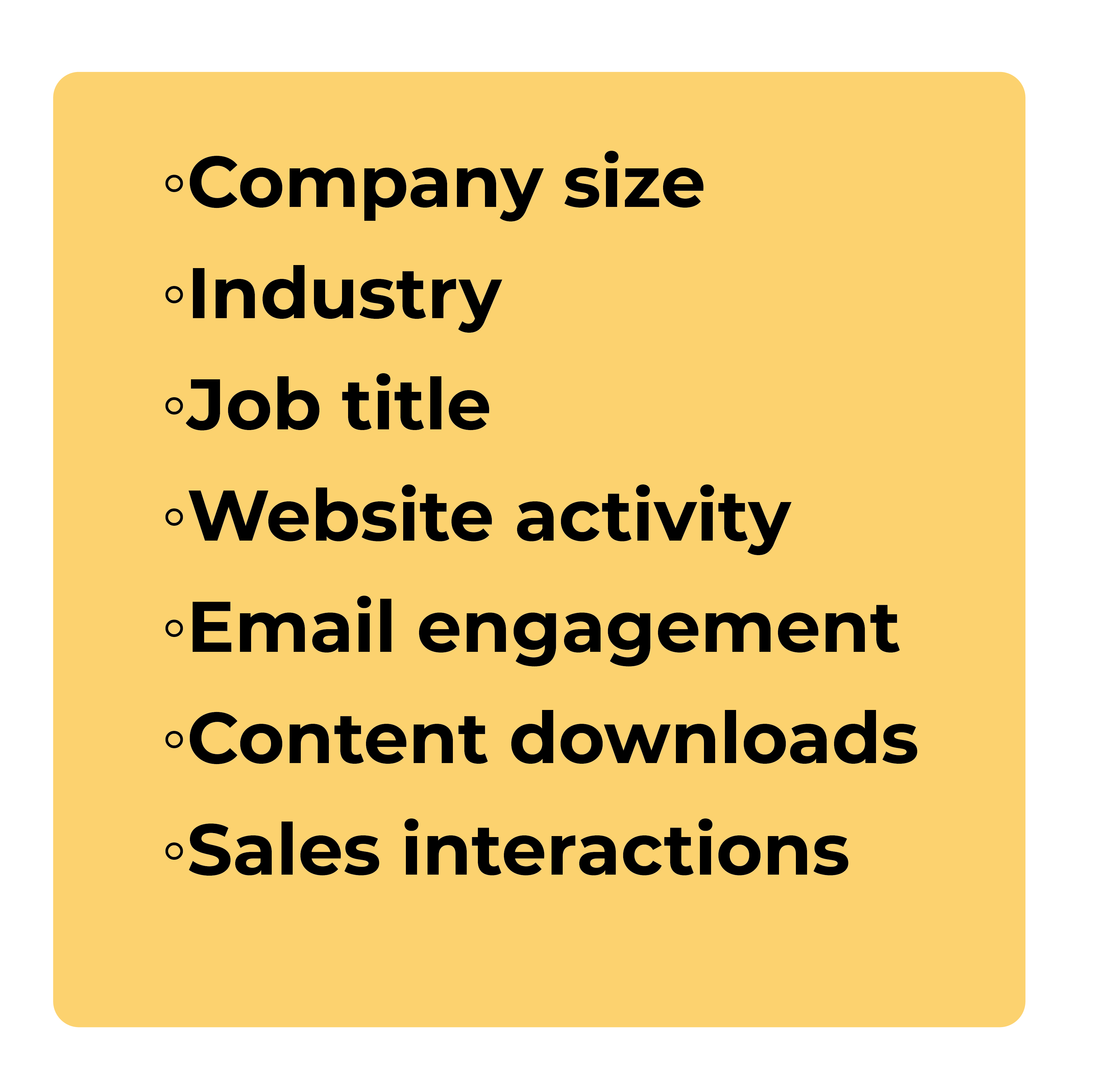
Each lead receives a score that reflects their likelihood of becoming a customer.
Rather than treating every lead equally, lead scoring helps businesses prioritize the opportunities most likely to convert. This allows sales and marketing teams to focus their efforts more effectively, improve efficiency, and increase revenue potential.
Why Lead Scoring Matters?
More Efficient Resource Allocation
Lead scoring helps sales and marketing teams focus on the most promising opportunities instead of spreading efforts across every incoming lead.
This ensures time and resources are invested where they can generate the greatest impact.
Improved Conversion Rates
High-scoring leads have already demonstrated stronger intent or engagement with your business, making them more likely to convert into customers.
Shorter Sales Cycles
Qualified leads are often further along in the buying journey, allowing sales teams to move conversations forward more efficiently and reduce sales cycle length.
Better Customer Engagement
Lead scoring enables more personalized communication and nurturing strategies based on a lead’s level of interest and readiness.
Data-Driven Decision Making
Rather than relying on assumptions, lead scoring allows businesses to make informed decisions based on measurable behaviors and customer data.
The Benefits of Lead Scoring
Increased Sales Productivity
Sales teams become more effective when they focus on leads with genuine conversion potential instead of spending time on low-fit opportunities.
Higher Conversion Rates
Prioritizing qualified leads naturally improves conversion rates and increases the likelihood of generating revenue from sales efforts.
Stronger Marketing ROI
Marketing teams can optimize campaigns and budget allocation by targeting leads that are more likely to engage and convert.
Improved Lead Nurturing
Not every lead is ready to buy immediately. Lead scoring helps identify which prospects require additional nurturing before entering the sales process.
Better Sales and Marketing Alignment
A shared lead scoring framework creates stronger alignment between sales and marketing teams by establishing common qualification standards and expectations.
Components of an Effective Lead Scoring System
Ideal Customer Profile (ICP)
An Ideal Customer Profile (ICP) defines the type of company most likely to benefit from your product or service.
Key considerations include:
- Industry
- Company size
- Geographic location
- Business challenges
- Decision-making structure
A clearly defined ICP helps businesses focus on opportunities that closely align with their ideal market.
Historical Data Analysis
Historical customer and CRM data can reveal patterns among leads that successfully converted in the past.
Analyzing this data helps businesses identify:
- Common characteristics
- Engagement behaviors
- Buying signals
- Conversion trends
These insights improve scoring accuracy over time.
Scoring Criteria
Lead scoring models typically combine:
- Explicit data (industry, company size, role)
- Behavioral data (website visits, email opens, demo requests)
Each criterion is assigned a numerical value based on its relevance to conversion likelihood.
Weighting and Scoring Models
Not all criteria carry the same importance.
For example, requesting a product demo may indicate stronger buying intent than downloading a blog article.
Assigning weights to different actions and attributes helps create a more accurate scoring model.
Thresholds
Score thresholds help determine when a lead is ready to move from marketing to sales.
For example:
- High-scoring leads may be immediately routed to sales
- Mid-level leads may continue through nurturing workflows
- Low-scoring leads may remain in long-term marketing sequences
These thresholds should evolve over time based on performance data.
Continuous Optimization
Lead scoring should be continuously reviewed and refined.
As markets, customer behaviors, and sales processes evolve, scoring criteria and weighting models should evolve as well.
Regular optimization helps maintain scoring accuracy and sales efficiency.
How to Implement Lead Scoring
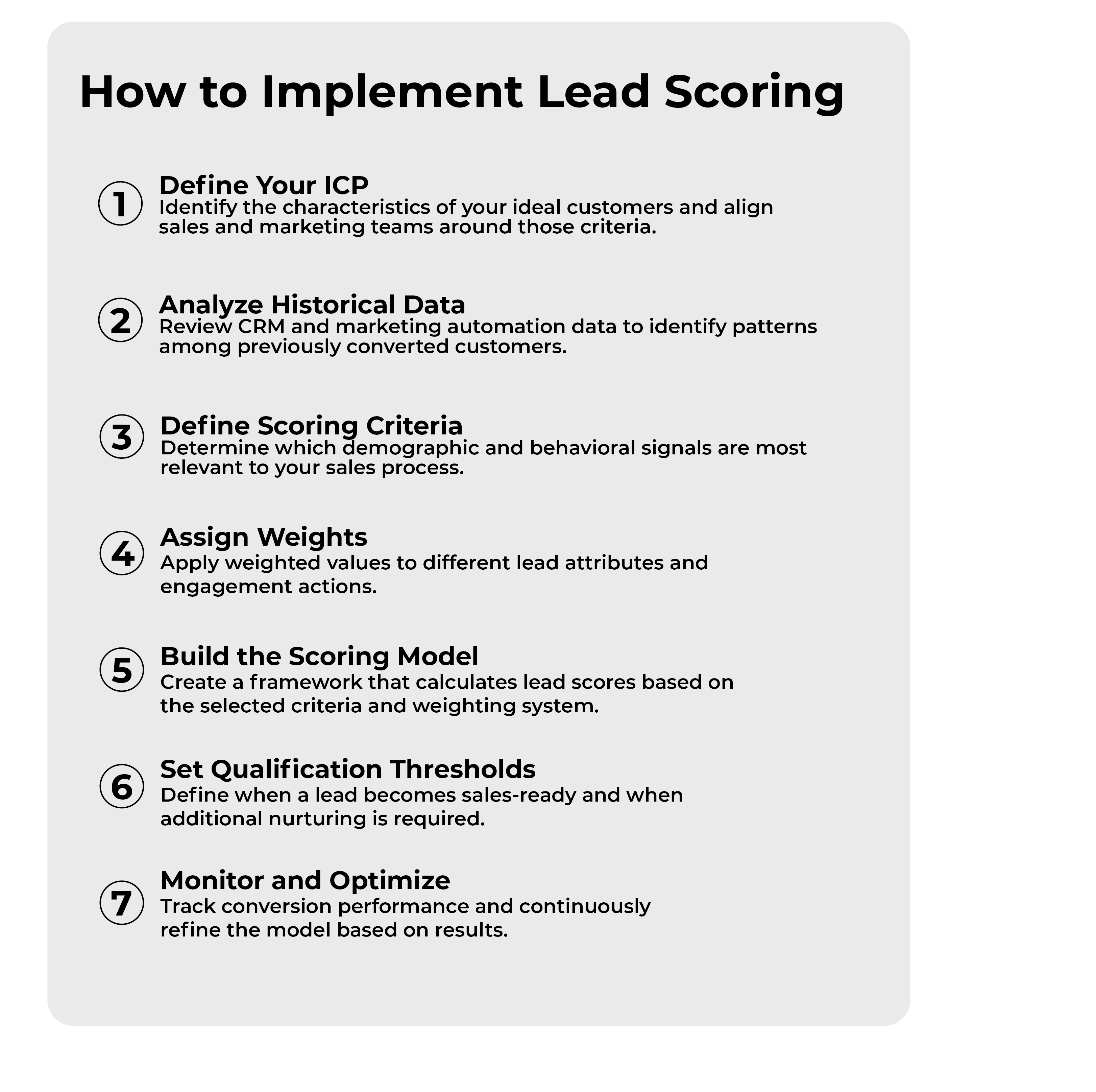
Lead scoring helps businesses focus on the opportunities most likely to generate revenue.
By improving prioritization, increasing efficiency, and aligning sales and marketing efforts, businesses can build stronger pipelines and create more predictable growth.
Companies that implement effective lead scoring frameworks are better positioned to:
- Improve conversion rates
- Reduce wasted effort
- Accelerate pipeline velocity
- Build stronger customer relationships
In increasingly competitive markets, this level of structure and visibility can become a significant competitive advantage.
Additionally, many businesses choose to strengthen their lead generation efforts by partnering with specialized business development teams or outsourced lead generation providers. Access to dedicated expertise, structured outreach processes, and advanced lead qualification systems can further improve lead quality and overall sales performance.
When combined with a strong lead scoring framework, these approaches can help organizations scale more efficiently and focus internal teams on closing high-value opportunities.